When something breaks, most people say “the website is down,” and I understand why. From the outside, it looks like one service with one bill. Most of the time it’s six, often from three or four different companies, and knowing which one broke tells you who to call.
I explain this a lot, and the version that sticks best uses the post office.
The registrar is the post office
The registrar is the company you rent your domain (yourbusiness.com) from: GoDaddy, Namecheap, Cloudflare, Squarespace (which took over Google Domains), and dozens of others. The registrar sends the renewal notice every year, and its account is where the domain’s settings live.
Moving a domain to a different registrar is locked down on purpose. It works like a title transfer: the old registrar gives you an authorization code, and the new one won’t take the domain without it. The code is a necessary check, because it’s what stops someone else from moving your domain without you.
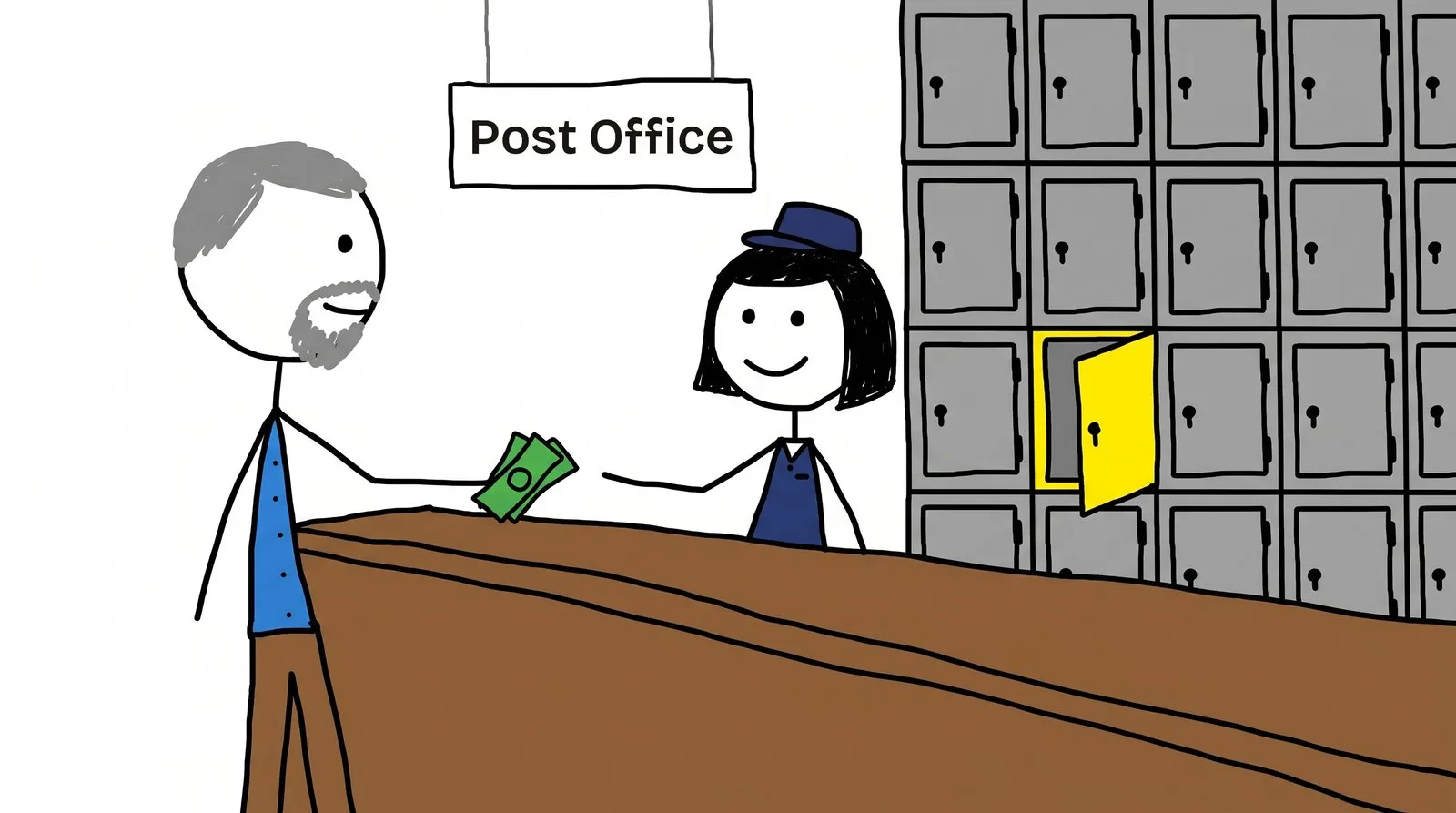
Your domain is your PO box address
Your domain is an address. If you owned a PO box, this would be that address. You pay for it every year, and it stays yours as long as you keep paying. If the renewal lapses, someone else can rent it, and getting it back can be expensive or impossible.
An address is all it is. The domain doesn’t hold your website or your email. It’s the name people type to find them.

Hosting is the house where your website lives
Your website is a set of files, and the host is who you pay to keep those files and serve them up to visitors. In the post office version, the host is the house. In real life, it’s a computer sitting in a server room somewhere (let’s pretend it’s in Ohio). When someone types in your domain name, the internet points at that box on a shelf in Ohio, and the box shows your files to that person.
Hosts run from a few dollars a month to $50 and up, and the price buys different levels of quality: more storage, room for more traffic, and more of the upkeep done for you. Bluehost, SiteGround, WP Engine, and WordPress.com are a few of the names you’ll see. When the site is slow or showing errors, the house is usually where the problem is.
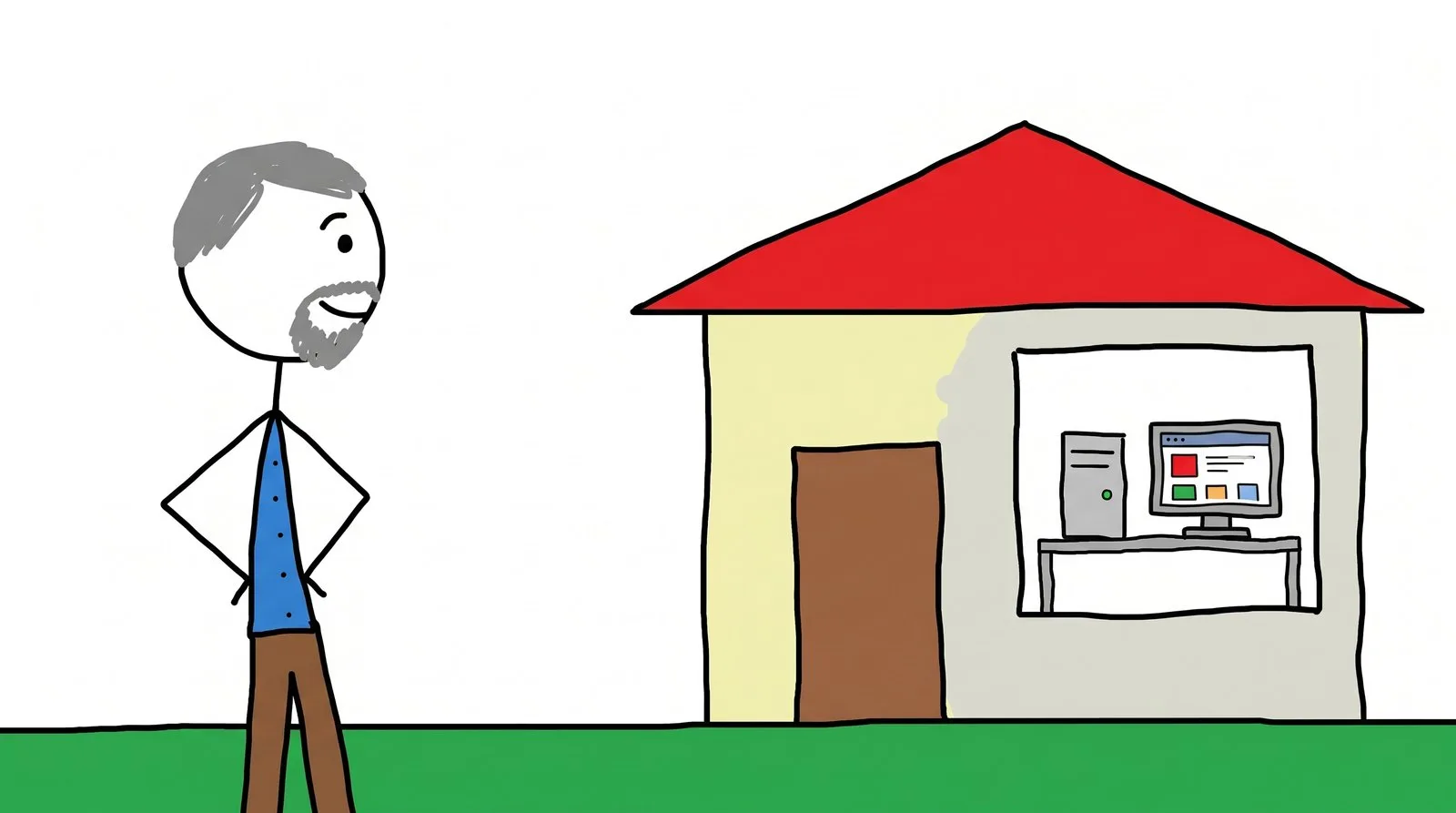
The SSL certificate is the lock on the front door
The SSL certificate is what puts the little padlock next to your address in the browser. It proves to visitors that they reached the real house, and it keeps anything they type into a form private on the way there. Most hosts set it up and renew it on their own, so you may never have heard of it.
Certificates expire, though (some every 90 days, some once a year), and a renewal can fail without anyone noticing, especially after a move or a change to the forwarding card. When that happens, the site is still there, but every browser puts up a full-page warning that the connection isn’t private, and most visitors turn around at the door.

DNS is the forwarding card
The post office needs to know what to do with anything addressed to your box, and DNS is the forwarding card it keeps on file. One line on the card sends visitors to yourbusiness.com to the house. Another line sends email for yourbusiness.com to your mail service.
That’s why a site can move to a new host without changing its address. The domain stays put, and only the card changes. It’s also why one typo on the card can take down a site that has nothing wrong with it.
The card doesn’t always live at the post office, either. Your DNS might be managed at your registrar, at your host, or at a third company like Cloudflare, and finding out which is the first job in most moves.
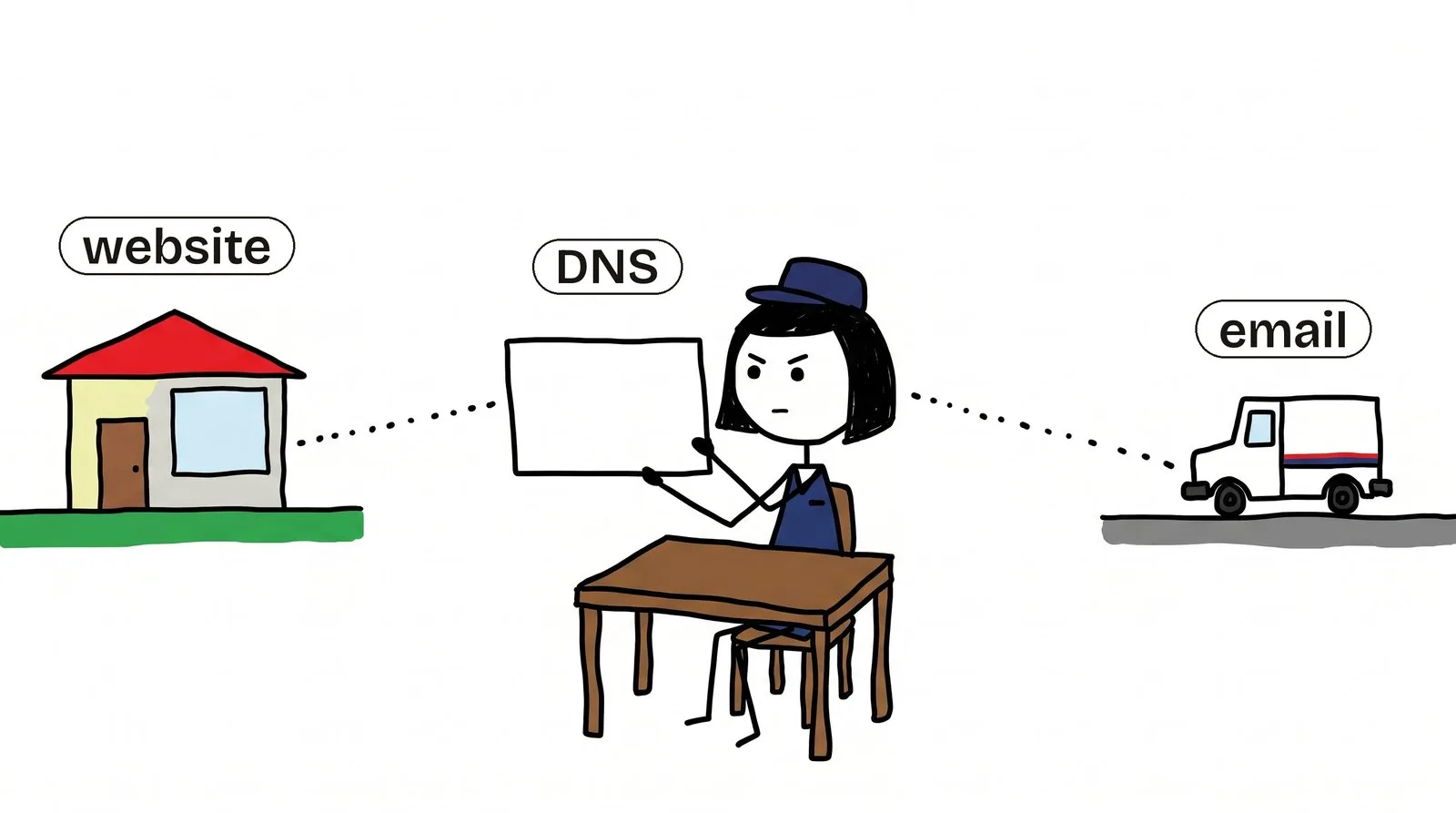
Email is a separate delivery service
This is where the PO box helps most. Email uses your address, but it doesn’t have to go to the house. A lot of businesses get their mail through Google Workspace or Microsoft 365, while the website lives at a host that never sees a single message.
That separation is the one that surprises people during a move. If someone rebuilds the forwarding card for the new house and leaves off the line for mail, the website comes up fine and the email quietly stops arriving. Before any move, it’s worth writing down where your email goes now.
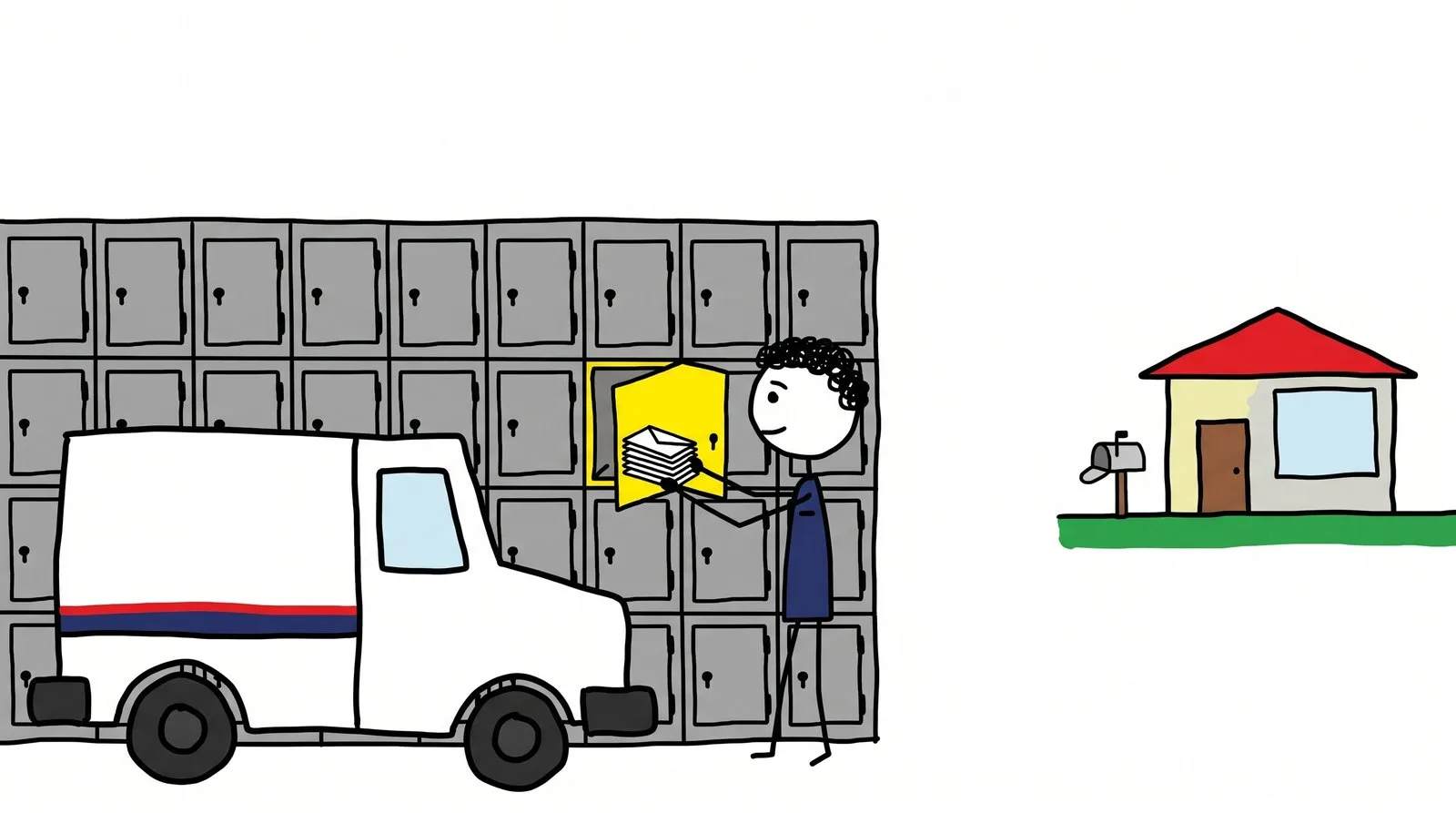
Why I keep them apart
Some companies will sell you all six in one place, and that’s convenient right up until you want to leave. What I like to do is keep the registrar separate from the host, because then you’re not tied. If you need to break up with your host, it’s easier to break up with one of them and not both.
Who holds each account matters as much as where it lives. If your developer registered the domain under their own account, the address isn’t in your name, and I wrote about how to get it back in My web guy ghosted me.
All six together
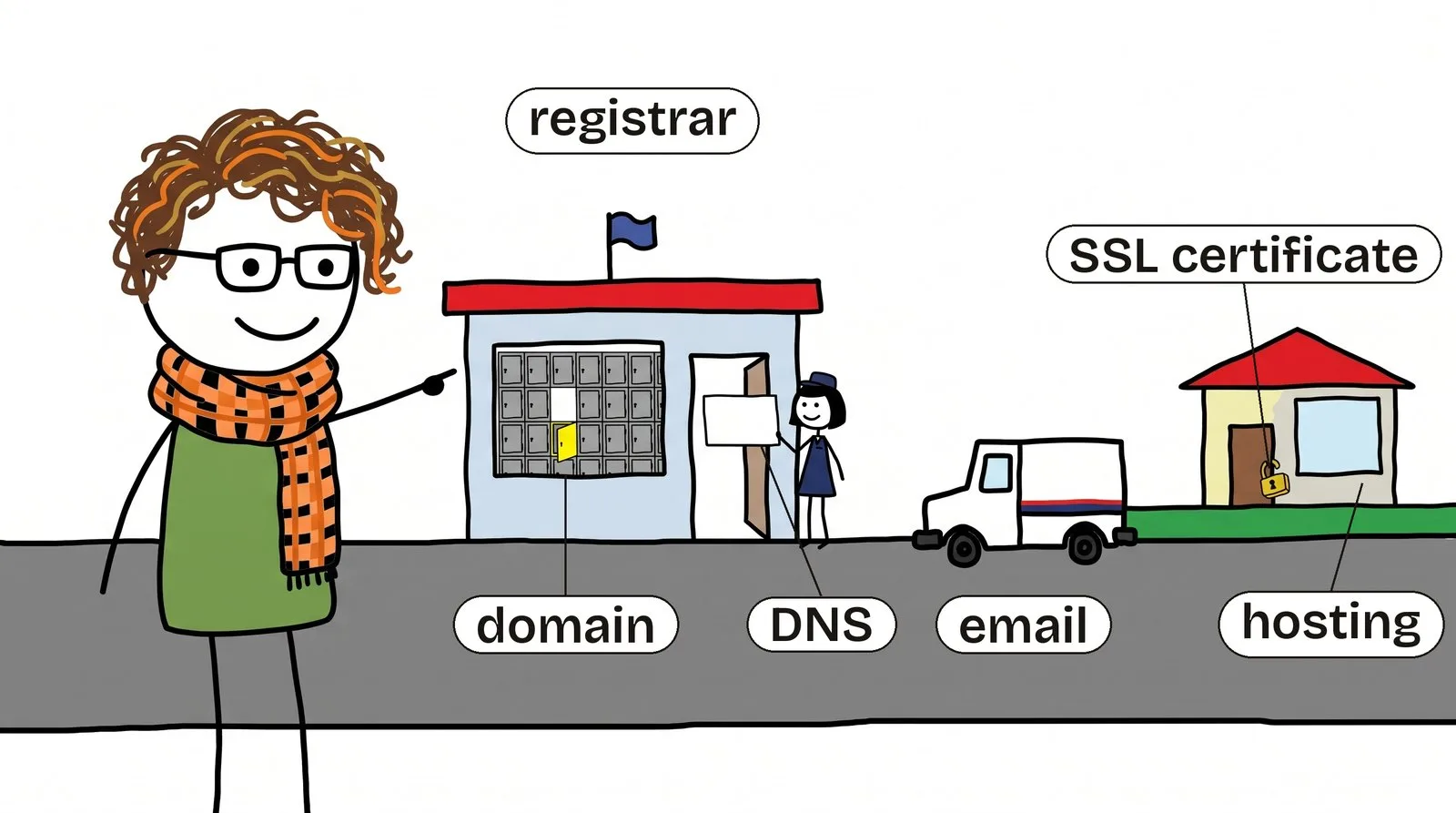
If you can name the company behind each of these, and you can log into each account yourself, you’ll know who to call the next time someone says the website is down.